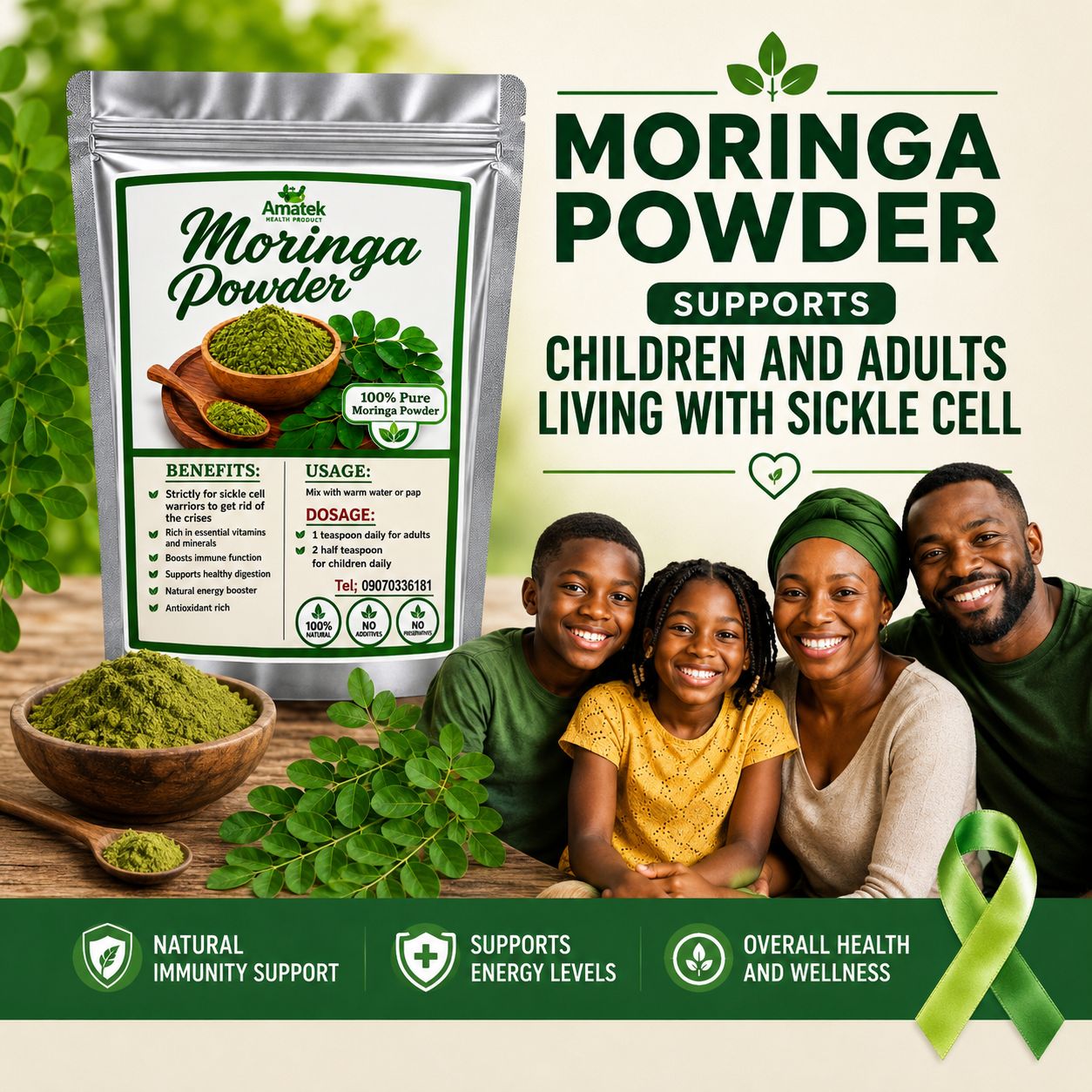
🔴 BREAKING | Nigerian Families Reporting Zero Sickle Cell Crises After Using This Natural Powder | FULL STORY BELOW
🩺 EXCLUSIVE HEALTH INVESTIGATION
"My Son Had Not Slept Through The Night In Three Years" — Then A Lagos Doctor Revealed The Ancient Nigerian Powerful product That Is Ending Sickle Cell Crises For Thousands Of Families
As hospital bills bankrupt Nigerian families and sickle cell warriors suffer in silence, a 100% natural powder made from a tree found in every Nigerian backyard is delivering results that are leaving doctors speechless — and giving parents their children's lives back.
By Adaeze Okonkwo, Senior Health Correspondent | Special Investigative Report
🕐 14-minute read
👁️ 48,291 reads this week
On a Tuesday night in April, Chiamaka Nwachukwu sat in the corridor of a Lagos hospital holding her seven-year-old son Tobenna, watching him shake from the pain of his fourteenth sickle cell crisis in three years. It was past midnight. The fluorescent lights hummed overhead. A nurse moved past without making eye contact.
"I remember thinking — if I have to come back here one more time, I am going to lose my mind," Chiamaka told our correspondent. "We had spent over ₦900,000 in three years. My husband and I were fighting about money every day. My son had not slept through a night without pain in years. I was not living. I was just surviving."
Six months later, Tobenna has not had a single crisis. He plays football. He attends school five days a week. The yellowish tinge in his eyes has cleared completely. His energy levels, says his mother, are "like a different child."
Nothing about Tobenna's medical treatment changed. No new hospital. No new drug. No surgery. What changed was something so simple — so natural — that Chiamaka admits she dismissed it the first two times someone suggested it to her.
"I was desperate enough to try anything. I just didn't expect it to actually work."
What changed was a single teaspoon of powder. Every morning. Mixed in pap. Before breakfast.
The powder comes from the Moringa oleifera tree — known as Zogale in Northern Nigeria, Ewe igbale in the South — a tree so common in Nigeria that most families have walked past one today without knowing it could change a sickle cell warrior's life forever.
What Scientists Have Been Saying For Years — That Most Nigerian Parents Never Heard
According to research published in nutritional science journals, Moringa oleifera contains a nutritional profile that is extraordinary by any standard — more iron than spinach, more calcium than milk, more Vitamin C than oranges, and more potassium than bananas. But for sickle cell warriors, it is two specific properties of Moringa that matter most.
"The anti-sickling and immune-modulating properties of Moringa have been documented in peer-reviewed research for over a decade. The challenge has always been delivering a pure, standardised form to patients consistently. When that is done, the clinical observations are remarkable — reduced crisis frequency, improved haemoglobin levels, and dramatically better quality of life."
— Dr. Emmanuel Obi, Consultant Haematologist, 22 years of clinical practice in Nigerian hospitals
Those two specific properties? First: Moringa's uniquely rich combination of iron, folate, and amino acids directly stimulates the bone marrow — the body's red blood cell factory — to produce healthier, more normal-shaped cells. Second: its 46 antioxidants and anti-inflammatory compounds suppress the inflammation that triggers the blood vessel blockages responsible for sickle cell pain crises.
In plain language: it helps the body make better blood. And it stops the fires that cause the pain.
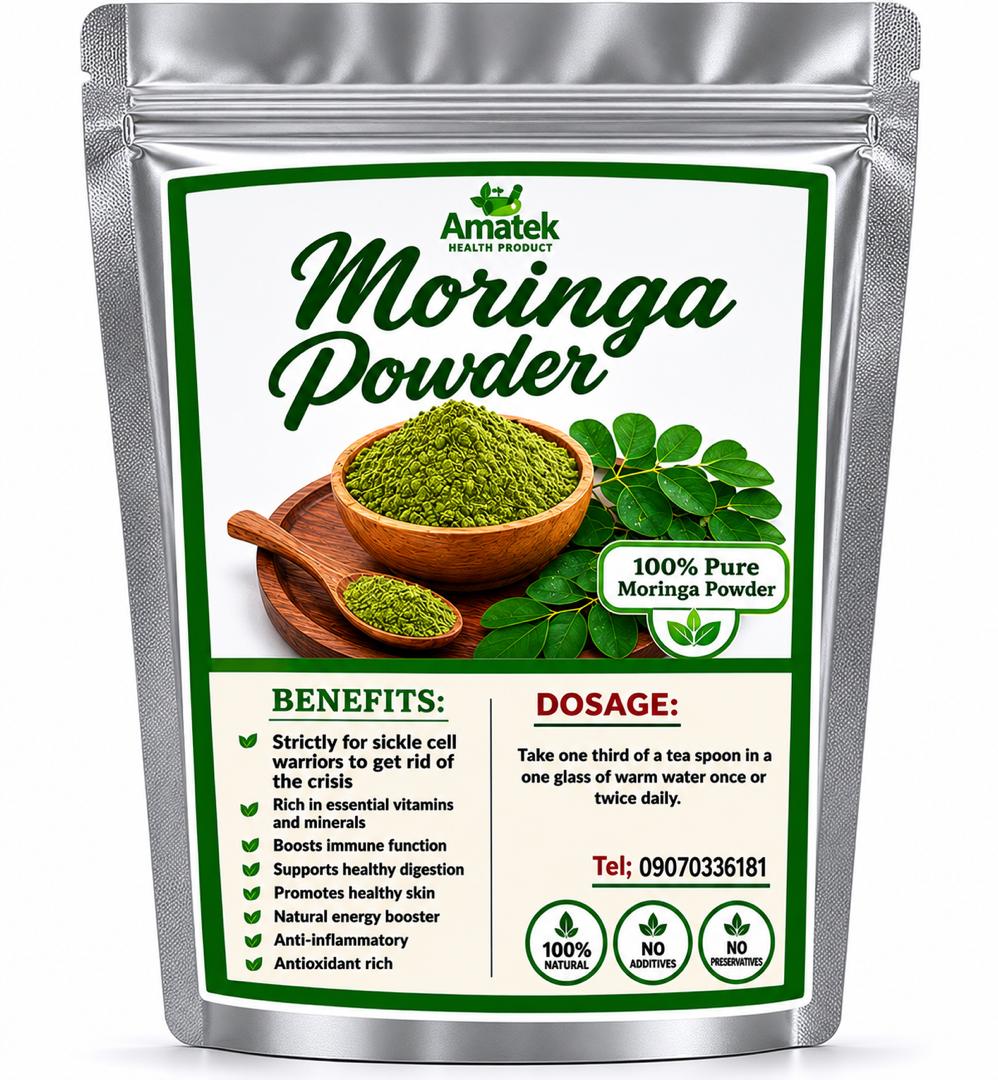
Amatek Moringa Powder — 100% pure, no additives, no preservatives — the product Nigerian families are now calling "the answer we were always looking for."
"The Drugs Work For A Week. Then We Are Back At Square One."
This correspondent spent three weeks speaking to sickle cell families across six Nigerian states. The story we heard, over and over, was the same.
😰 Hospital admissions that happen monthly — sometimes weekly — with bills that have emptied savings accounts and forced families to sell assets
😰 Children who have missed entire school terms, who cannot play or run without triggering pain, who have never known what a normal childhood feels like
😰 Fathers who have left jobs to be at hospital bedsides. Mothers who have not slept properly in years. Siblings who have grown up watching a brother or sister suffer
😰 The yellow eyes that parents describe as "the warning sign" — the sign that another crisis is coming, and there is nothing they can do to stop it
😰 Chronic headaches, recurring malaria, constant fatigue — conditions that medical experts say are directly related to the sickle cell body's weakened immune and blood systems
Conventional treatment — hydroxyurea, folic acid, painkillers, blood transfusions — provides relief during and after a crisis. But as Dr. Obi explains, it does not prevent the next one.
"We manage the crisis. We manage the pain. But we do not have a treatment in mainstream Nigerian medicine that rebuilds the immune system and supports healthy haematopoiesis — healthy blood cell production — over time, in a way that prevents the next episode. That is the gap. And it is a very significant gap."
— Dr. Emmanuel Obi, Consultant Haematologist
It is exactly this gap — the space between managing crises and preventing them — that Amatek Moringa Powder appears to fill.
Two Nigerian Families. Two Stories. One Common Thread.
📍 Case Study 1 — Kano State
"After Six Weeks, My Son's Eyes Were Clear. After Ten Weeks, No Crisis."
Aisha Farouq's son was five years old when he was diagnosed with SS genotype sickle cell disease. For three years, the family averaged two hospital visits per month. "We spent our entire savings. We borrowed from family. We were drowning," she told this reporter.
A neighbour introduced her to Amatek Moringa Powder. She was sceptical. "I told her — I have tried herbs before. Nothing works." But she tried it. One teaspoon in pap, every morning before breakfast. "By week three, his energy changed. By week six, his eyes were clearing. By week ten, we had not been to hospital once." Aisha has now ordered the 3-month recommended package for the second time.
📍 Case Study 2 — Anambra State
Adult Sickle Cell Patient Goes Three Months Without Hospitalisation For First Time In His Life
Chukwuemeka Ihejirika is 34 years old and has been living with sickle cell disease since birth. "I have spent my entire adult life in and out of hospitals," he said. "I have lost jobs because of this disease. I have lost relationships." His sister convinced him to try Moringa Powder. He was unconvinced.
"After three months — not one hospital visit. For the first time in my life, I went three full months without a crisis or an admission. My energy, my appetite, my quality of life — everything changed. I tell every SS warrior I know: try it. You have nothing to lose and everything to gain."